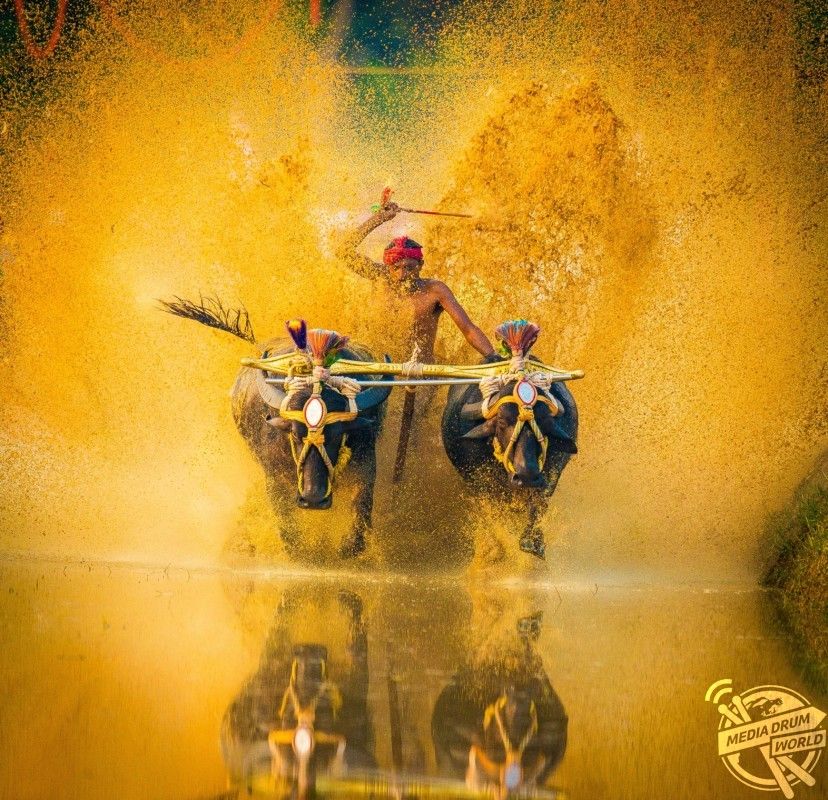
Kambula is a traditional and spiritually significant buffalo race practiced in the Tulunadu region of coastal Karnataka and parts of Kerala. More than a sport, Kambula is a ritualistic agricultural tradition deeply connected to farming, faith, and community life.
Rooted in gratitude to nature and divine forces, Kambula reflects the harmonious relationship between humans, land, and livestock. Practiced for centuries, Kambula stands as a living symbol of Tulunadu’s agrarian culture and spiritual heritage.
Experience the power, rhythm & spirit of Tulunadu
The word “Kambula” is believed to be derived from the traditional wet paddy fields (kambula gaddi), where this race is conducted. Historically, Tulunadu has been a rice-growing region dependent on monsoon rains, fertile soil, and buffalo-powered farming.
Kambula originated as a ritual offering and celebration after the agricultural season. Farmers organized the race to honor the buffaloes that played a vital role in ploughing fields and sustaining livelihoods.
Kambula is closely associated with Daiva Aradhane (Spirit Worship), which is central to Tulunadu’s religious life. Many Kambulas are conducted as part of temple festivals, shrine celebrations, or offerings to local daivas such as Panjurli, Guliga, Jumadi, and other guardian spirits.
Thus, Kambula is not merely competitive—it is an act of devotion seeking divine blessings for prosperity, good harvest, and community welfare.
Buffaloes hold a sacred and respected place in Kambula:
The strong bond between the farmer and the buffaloes is central to the tradition. Skill, care, and mutual trust determine success more than speed alone.
Kambula is usually held in a slushy, water-filled paddy field. Two buffaloes are yoked together and guided by a runner known as the “Gipadapunaye & Palay Muttunar”.
Kane Palay is a traditional form of Kambula where the result is determined by the height of the water splash created by the running buffaloes.
Common measurements include 6.5 Kolu, 7.5 Kolu and higher. Kane Palay emphasizes ritual authenticity rather than speed.
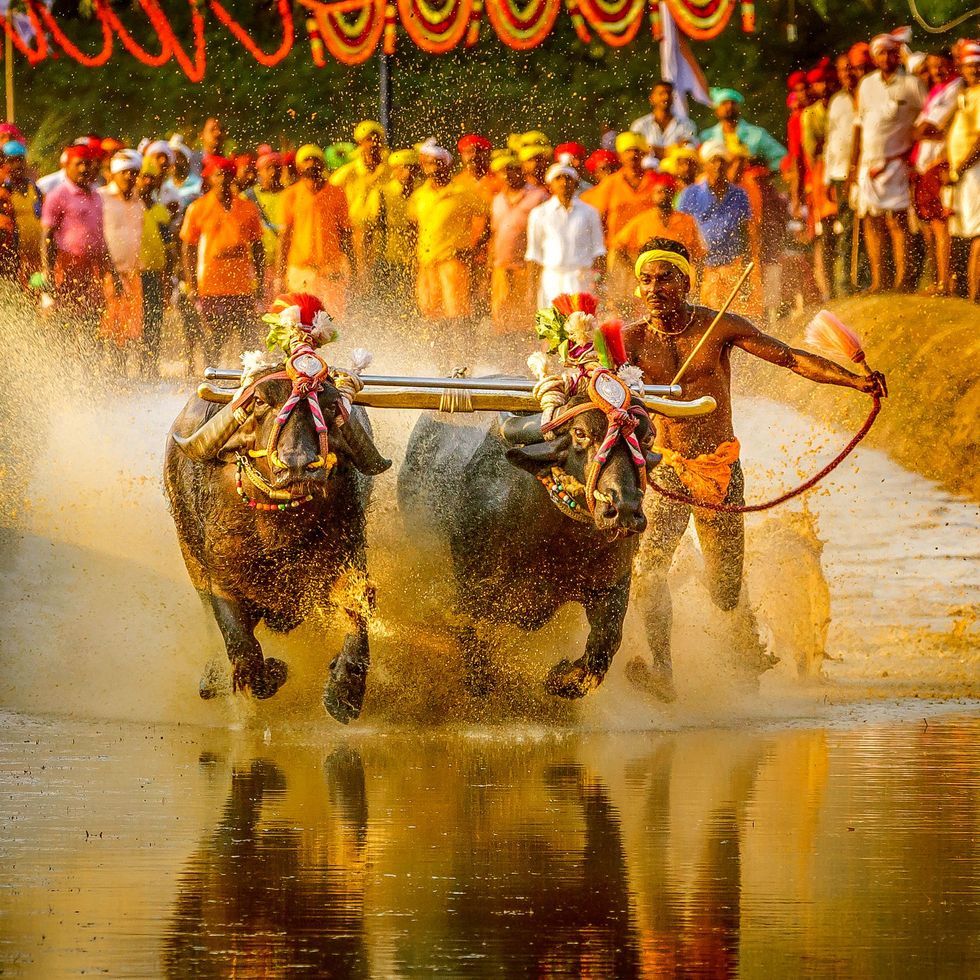
Adda Palay is a parallel-track Kambula where two teams compete simultaneously on adjacent tracks.
This format represents a more competitive structure while preserving traditional elements.
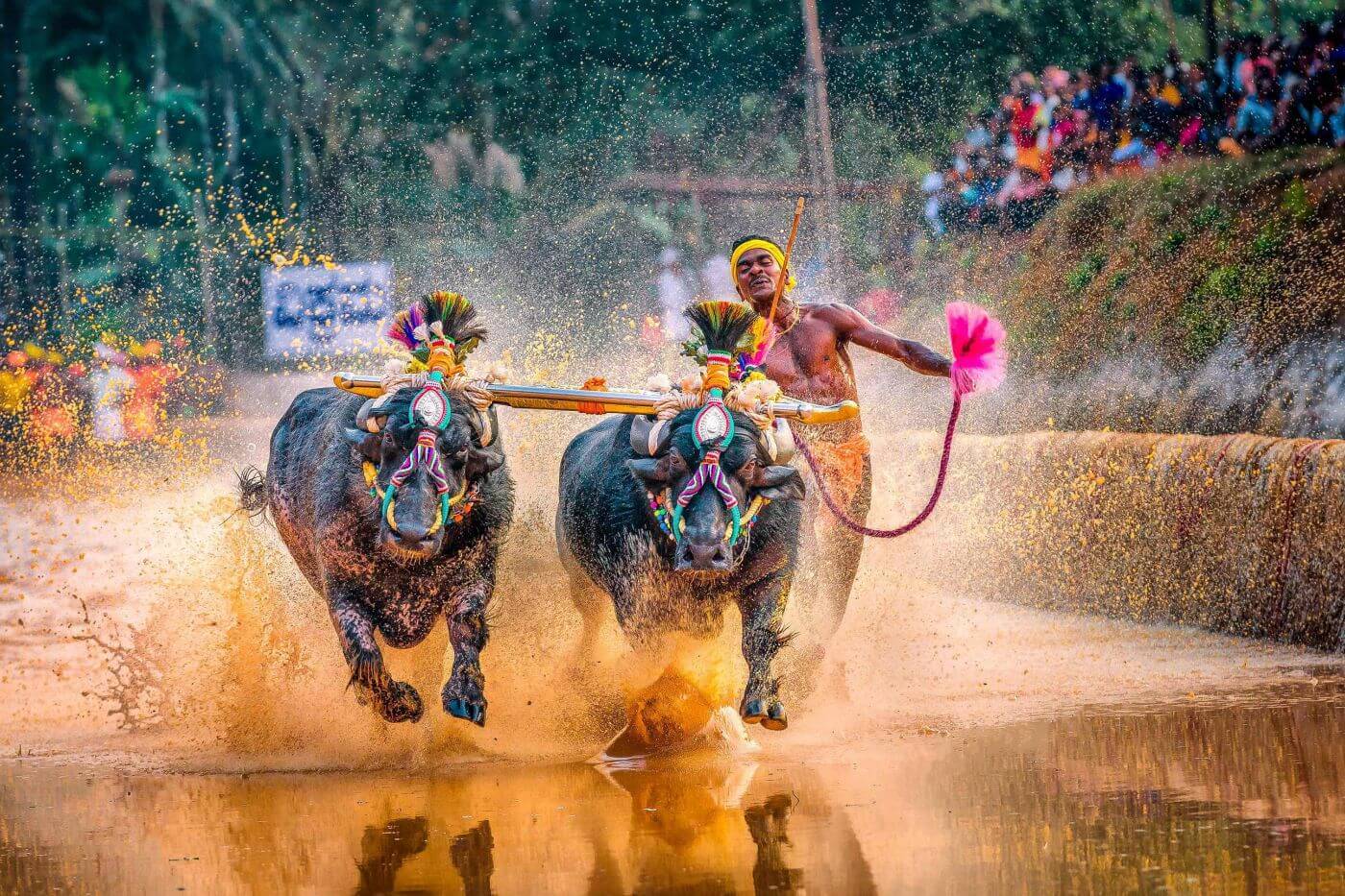
Ballh literally means rope. The runner controls the buffaloes using rope-based guidance tied to the yoke.
Ballh reflects early agricultural practices used in wet paddy fields.
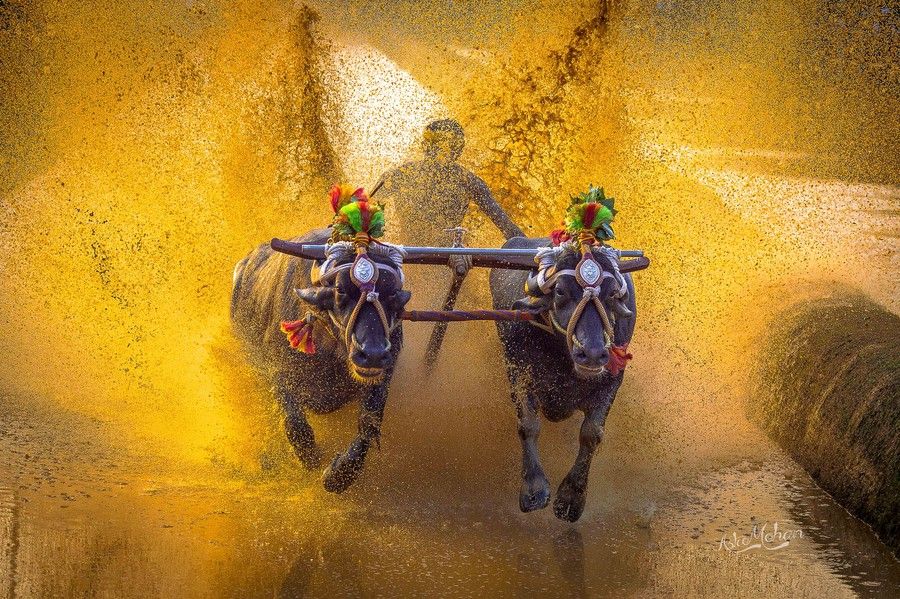
Nayer means plough. A plough-like wooden implement is attached to the buffaloes during the run.
Nayer highlights Kambula’s identity as an agrarian ritual rather than a mere race.
Kambula stands as a proud testament to the rich cultural, religious, and agricultural heritage of Tulunadu. It teaches us that tradition, when rooted in respect and devotion, remains relevant across generations.
Tulunada Mahathme is committed to documenting and sharing such sacred traditions, ensuring that the legacy of Kambula continues to inspire and educate future generations. May the spirit of Tulunadu and its daivas continue to protect and guide us all.